.jpg)
EU-UK Spotlight: Renewables, trade, and the global supply chain

 Search


 Search


The Puma Supreme People’s Court case confirms that, where a design patent is challenged on the ground that it conflicts with earlier trademark rights, Chinese courts will assess the conflict by examining whether a design functions in practice as a trademark and is likely to cause confusion.
As reflected in the outcome of the Puma case, in sectors such as footwear, where visual features commonly serve as indicators of product origin, Chinese courts are likely to assess disputed designs using trademark infringement standards rather than a purely design‑based comparison.
The case also shows that a registered or licensed trademark is not always a safe harbour if the mark is materially altered in use, and such changes bring it closer to a distinctive and reputable brand. For in‑house teams, the Puma case underscores the need to align trademark, design patent and licensing strategies, and to closely monitor how branding is implemented in practice in the market.
In a series of closely related decisions jointly referred to as the Puma case, the Supreme People’s Court has recently provided important guidance on how conflicts between design patents and prior trademark rights should be assessed. The cases arose from disputes over athletic shoe designs featuring side‑stripe graphics that were protected by design patents but alleged to encroach upon Puma’s earlier trademark rights. After the China National Intellectual Property Administration and the Beijing Intellectual Property Court initially rejected Puma’s invalidation requests, the Supreme People’s Court overturned those outcomes and ordered the reissuance of the invalidation decisions. In doing so, the court clarified that the grant of a design patent, or reliance on a registered or licensed trademark, is not a safe harbour against an invalidity challenge based on conflict with earlier trademark rights. Taken together, the Puma case illustrates a broader approach adopted by the SPC, and is likely to be influential in future cases, emphasising the actual function of design features when determining whether design patent protection oversteps into trademark territory.
The Puma case refers to several closely related disputes between Puma and two Chinese sports footwear manufacturers concerning the registration and enforcement of design patents for athletic shoes. Puma owns several trademarks consisting of curved stripe designs applied to the sides of footwear and has held trademark registrations for such designs in China since as early as the 1970s. These marks have been used consistently on sports shoes and promoted in China over a long period of time.
Between 2010 and 2022, the Chinese manufacturers obtained multiple design patent registrations covering athletic shoe designs that featured stripe‑like graphic elements positioned prominently on the side of the shoe. In the disputes, the patentee either argued that the designs reflected lawful use of its own registered trademark, or it relied on the allegedly licensed use of a registered trademark owned by an affiliated company.
Puma filed invalidation requests before the China National Intellectual Property Administration (CNIPA), asserting that the patented designs conflicted with its earlier trademark rights and should be invalidated under Article 23(3) of the Patent Law. Although those requests were initially rejected and the decisions upheld on first‑instance judicial review before the Beijing IP Court, the outcomes were later overturned on appeal. We set out the key highlights from the Puma case below.
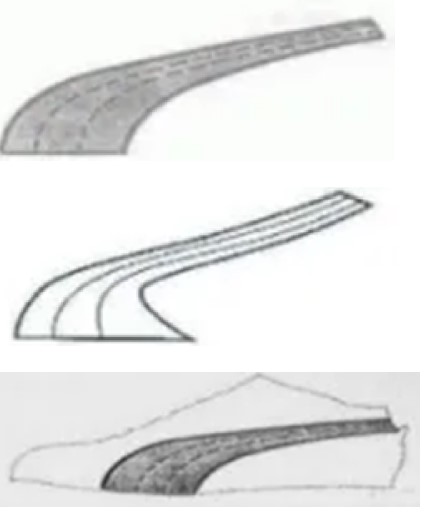
Images: Puma’s registered trademarks:
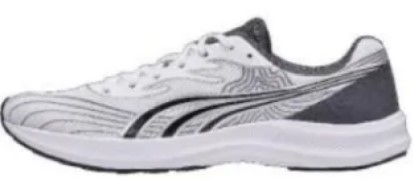
One of the design patents by Puma’s adversaries, by way of example:
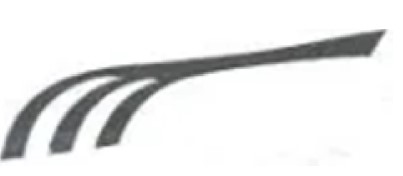
The trademark licensed to one of Puma’s adversaries and relied on as a defence:
Across the five disputes in this Puma case, the Supreme People’s Court (SPC) overturned the earlier rulings that had upheld the disputed design patents and ordered the CNIPA to reissue decisions, as those designs conflicted with Puma’s prior trademark rights. In doing so, the SPC focused on how the patented designs were used on footwear in practice, how consumers were likely to perceive those designs, and whether reliance on registered or licensed trademarks could justify their implementation. Taken together, the Puma case sets out a clear framework applied by the SPC for resolving conflicts between design patents and earlier trademarks.
Taken together, the related Puma cases significantly strengthen the position of trademark owners faced with imitation products that seek legitimacy in China through formal IP registrations. The SPC made clear that the existence of a design patent does not prevent a substantive assessment of whether the protected design encroaches upon earlier trademark rights, particularly where the design functions in practice as a source identifier. This is a critical development for in‑house trademark teams operating in China, where design patents are granted without substantive examination and are frequently used by imitators to give counterfeit or “dupe” products a veneer of legality or a shield from infringement.
The decisions also demonstrate that Chinese courts are prepared to look beyond formal IP layering and assess the actual market reality. Where a product’s visual features are likely to be perceived by consumers as indicating origin, the SPC will apply trademark infringement standards to determine whether a conflict exists, even if those features are embedded in a registered design patent. This approach directly addresses a common enforcement challenge, where copycats rely on minor design variations or registered design patents to resist trademark claims.
Importantly, the Puma case also shows that registered or licensed trademarks will not protect bad‑faith imitation where the mark has been materially altered in use. The SPC rejected attempts to rely on trademarks that had been modified in a way that moved them closer to Puma’s reputable branding, reinforcing that formal registration cannot sanitise conduct that undermines the trademark system. This is particularly relevant in dupe and grey‑market scenarios in China, where sophisticated infringers often combine registered marks, licences and design patents to complicate and obstruct enforcement.
Finally, the Puma case highlights the strategic value of design patent invalidation as a complementary enforcement tool. For in‑house counsel facing entrenched imitators in China holding registered rights that are difficult to challenge directly under trademark law, the SPC’s reasoning now provides a viable pathway to dismantle those structures. By allowing trademark principles to invalidate design patent protection, the case offers brand owners a more effective means of addressing “IP‑laundered” counterfeits and reinforce the primacy of trademarks in protecting brand identity in China.
Authored by Stefaan Meuwissen, Mingjia Deng, and Helen Xia.